Logistics & Supply Chain
A Train Reaches the City. The Supply Chain Still Has Work to Do.
The Kanda Express movement to Agartala shows why bulk transport, careful handovers and last-mile planning must work together.
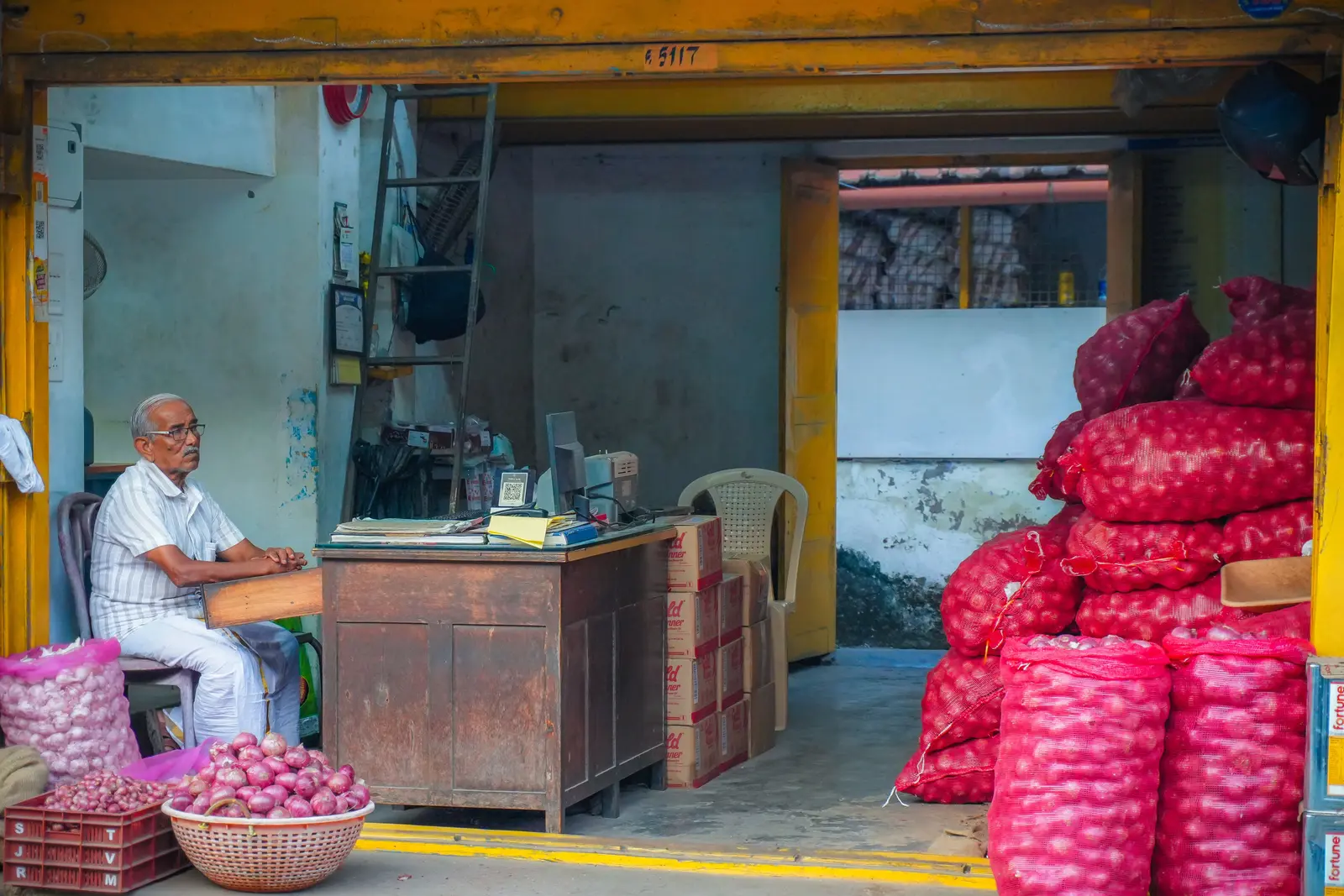
On 16 October 2026, the Department of Consumer Affairs announced the first Kanda Express movement to Agartala. The dedicated rail consignment was carrying approximately 440 metric tonnes of buffer-stock onions and was expected to reach the Tripura capital by 18 October.
The announcement said the stock would support distribution across seven of Tripura’s eight districts. It also reported that more than 2,800 metric tonnes of buffer onions had already been dispatched across the North-East through two rail rakes and 44 truck consignments. [1]
The dates are worth stating carefully. The government made the announcement on 16 October and gave 18 October as the expected arrival date. The official release described a planned movement; it was not an arrival confirmation.
For a logistics student, the story is useful because it shows that the longest part of a journey is only one part of the supply chain.
Rail can move the volume. It cannot complete every delivery.
A train can carry a large quantity efficiently to a regional destination. But the onions do not become available across Tripura simply because the rake reaches Agartala.
Someone must prepare to receive the consignment, match it with the transport documents, identify any quantity or condition differences, allocate the stock and arrange onward movement. Road vehicles must then take smaller loads to the intended consumption centres.
This is multimodal logistics: different modes handle different parts of the movement. Rail performs the bulk line-haul journey; road transport provides the flexibility needed for onward distribution.
At the launch of India’s National Logistics Policy in September 2022, the government highlighted the value of helping farmers get produce to markets faster while reducing wastage and delay. The Kanda Express story offers a practical setting in which to examine those goals. [3]
Plan backwards from the final destination
A beginner may start a transport plan by asking, “When will the train leave?” A stronger planner starts at the other end.
When does each destination need the stock? How long will unloading and verification take? How many onward vehicles are required? Which destinations should be served first? What happens if the rake arrives after the receiving team’s normal working hours?
These questions turn a transport booking into a distribution plan.
Before dispatch, the team should confirm the receiving location, unloading arrangements, contact person, available storage and onward vehicle schedule. The destination should know what is coming, how much is expected and which documents will accompany it.
Watch the handover points
Risk often increases when responsibility moves from one party or mode to another.
At a rail-to-road handover, the receiving team may need to compare the expected and received quantities, check the condition of the packages, record visible damage and link each outward load to its destination. For a food product, the team must also avoid unnecessary waiting and handling that may affect quality.
The records do not have to be complicated. A useful movement-control sheet can include:
- Consignment or reference number
- Planned and actual arrival time
- Expected and received quantity
- Condition noted at receipt
- Quantity allocated to each destination
- Vehicle number and dispatch time
- Person responsible for each handover
- Delay, shortage or damage reported
A clear record allows the next shift or supervisor to understand what happened without depending on memory or WhatsApp messages alone.
A Kerala classroom example
The following is an invented learning example.
A fictional distributor is moving sacks of onions from Coimbatore to a warehouse near Kozhikode. The main truck arrives on time, but three smaller vehicles intended for onward delivery have not been confirmed. The unloading team places all the sacks in one area without separating the quantities meant for different towns.
The long-distance journey has finished successfully, yet the distribution operation is already falling behind.
A student reviewing the plan should identify the missing controls: destination-wise allocation, confirmed vehicle capacity, dispatch sequence, labelled batches and an escalation contact. The student could then prepare a revised loading sheet and a short delay update for the sales team.
This exercise develops an important habit: measure success at the receiving point, not merely at the end of the longest journey.
Build an exception plan
No movement plan remains perfect throughout its journey. A vehicle may be delayed, unloading space may be occupied, the received quantity may differ from the document or one destination may suddenly need priority.
An early-career logistics professional should know who can make a decision, which changes require approval and how to record the revised plan. A good exception message answers four questions: What happened? What is affected? What action is being taken? When will the next update be given?
That ability is valuable in a vegetable supply chain, a warehouse replenishment movement or an international shipment.
Practical takeaway
Draw every shipment as a complete chain—origin, main transport, receiving point, onward transport and final destination. Assign a person, document and expected time to every handover.
Students who want to practise transport planning, warehousing, documentation and supply-chain coordination can explore Bayspro’s Diploma in Logistics, Warehouse & Inventory Operations and PG Diploma in Logistics & Supply Chain Management.
Sources & further reading
- Press Information Bureau — First-Ever Kanda Express to Reach Agartala
Official announcement dated 16 October 2026; 18 October was the expected arrival date, not a confirmed arrival.
- News on AIR — Kanda Express carrying 440 metric tonnes of onions
Government news report on the planned movement.
- Press Information Bureau — National Logistics Policy
Official background on multimodal and first- and last-mile logistics.
Put your interest into practice
Explore a relevant programme.
Diploma in Logistics, Warehouse & Inventory Operations PG Diploma in Logistics & Supply Chain ManagementHave questions? Talk to a programme adviser.